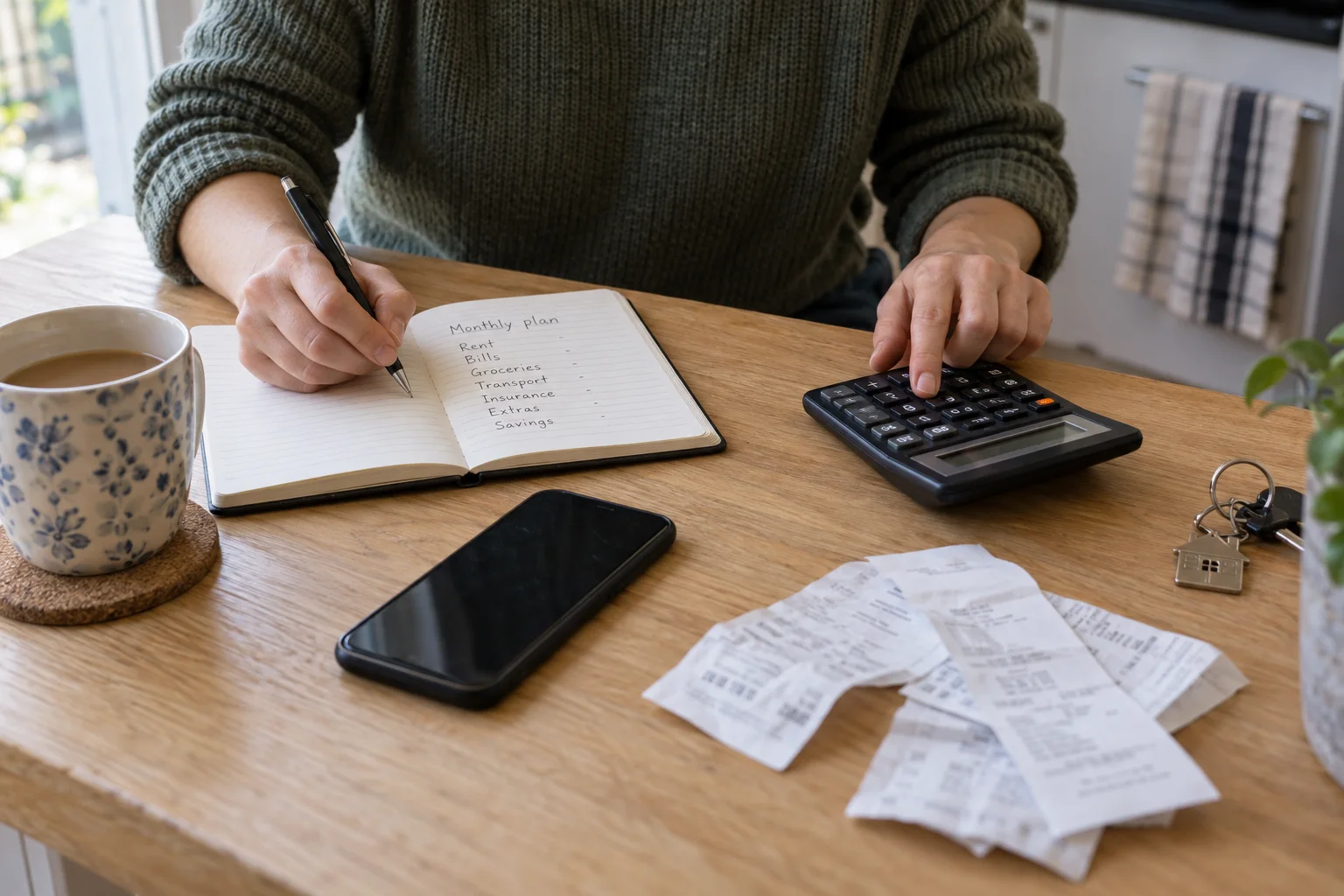
Separate arriving from everyday living
The first supermarket shop includes washing-up liquid, a saucepan and food for the week. A train ticket sits beside a furniture payment on your statement. After a move, spending that will not happen again is mixed with spending that will become routine. Looking only at your balance makes it difficult to see what next month might actually cost, or how much of today’s money is already needed for a bill.
A useful first-month budget starts by separating those items and giving upcoming payments dates. Emma can bring supported accounts into one budgeting view, which may help if your money is spread across providers. Whether it suits you depends on your accounts, preferences and the features you need. This guide considers everyday budgeting only; it does not assess Emma’s savings or investment products, and a clearer spending display cannot guarantee a lower bill or determine what you can afford.
Put payday on the page first
Begin with the amount of pay that reaches your account after deductions. Compare the payslip and the corresponding bank entry, then write down the next expected payment date. If you joined partway through a pay period, the first payment may cover fewer days than a normal one. Avoid turning that unusual figure into a permanent monthly assumption without checking what it includes.
For variable hours, distinguish money that is confirmed from additional income you might receive. Keep possible overtime or extra shifts in a separate note until you know the amount and timing. A monthly total can look comfortable while leaving a gap before a large payment: weekly wages arriving after rent is due cannot fund an earlier debit. A simple calendar helps expose that timing problem.
If you transfer money from another country, enter the sterling amount actually received and record transfer charges separately. Keep the expected payment marked as an estimate until it arrives. Exchange rates and fees can change, so a planned conversion is not the same as money available for a direct debit today.
Give each expense a sensible home
Use three short lists to distinguish the cost of establishing a household from the cost of maintaining it. This makes the second month easier to plan: you can remove the kettle from the forecast while keeping food, travel and other recurring needs. You do not need elaborate categories to make that distinction useful; choose labels that you will still understand in a few weeks.
Deposits need their own note because money tied up in a deposit is unavailable for current spending, even if it may later be returned. In a shared home, record the amount you are responsible for and the arrangement for paying it. Check how reimbursements appear in your chosen system so that paying a full household bill and receiving a housemate’s share do not obscure your own cost.
- Getting established: journeys connected with the move, essential household purchases, temporary accommodation and any confirmed setup charges.
- Keeping things running: your agreed housing costs, utilities, transport, phone and other regular commitments, each matched to a payment date.
- Variable and less frequent costs: groceries, social spending, clothing, travel to see family and predictable expenses that do not appear every month.
What a combined account view can add
Emma’s budgeting features include account aggregation, transaction tracking and recurring-payment tools. Having those details together can make a weekly review easier to start. You still bring the explanation behind the numbers: an unusually large grocery-shop transaction may include household equipment, and a transfer between your own accounts needs to be understood differently from wages or a purchase.
Check support for your exact account before relying on a connection. Emma’s help page, updated on 27 October 2026, says the provider search inside the app is the most current source. Some institutions share only particular account types, so finding a bank’s name does not settle whether all your accounts will be available. Emma’s onboarding guidance also says an initial supported current, savings or credit-card account connection is needed.
Those checks concern the app’s functionality. They do not establish whether you qualify for a bank account or any other financial product. If you are still arranging banking after arriving in the UK, you can begin recording household commitments manually and decide later whether connecting an app would make the routine easier.
Choose a plan for a specific reason
Emma has a free Basic tier alongside Plus, Pro and Ultimate subscriptions. Compare the current features and payment terms directly before selecting one. A price displayed as a monthly equivalent may be charged annually, and a trial or introductory reduction may end before the renewal price applies. This article deliberately leaves prices to the current provider page rather than turning a temporary offer into part of your household forecast.
Emma describes an institution connection as a bank login, which may contain several accounts. Its help guidance lists two logins for the free tier, four for Plus and unlimited logins for Pro and Ultimate. Count the connections you actually need and check the live comparison when choosing; a login allowance does not ensure that every account held with that institution is supported.
Treat a paid subscription as a new recurring expense with a purpose. Identify which feature you would use and how often. Before starting a trial, record the renewal amount, billing interval and cancellation steps. Do not assume that improved visibility will produce savings large enough to cover the fee, particularly while your first-month spending is still settling down.
Compare the work each method asks of you
A notebook can be effective when the numbers are simple and you are comfortable entering them yourself. An account-connected app can reduce repeated checking, but it introduces compatibility and subscription questions. Your existing bank may already show enough information for a useful weekly review. The best starting point is the method you can keep accurate without making the task unnecessarily complicated.
| Method | A situation it may suit | Your part of the routine |
|---|---|---|
| The bank app you already use | Most income and daily payments pass through a single account. | Add cash, payments elsewhere and commitments that have not yet appeared in the account. |
| A notebook or spreadsheet | You prefer manual records, custom categories or no additional account connection. | Enter the figures consistently, check your arithmetic and keep payment dates up to date. |
| Emma’s combined view | Several supported providers need reviewing together. | Confirm account availability, review the meaning of transactions and assess the cost of any optional plan. |
Build a review you can keep doing
Start with the weeks ahead rather than trying to reconstruct every transaction made during your move. A brief review is easier to repeat than a long session postponed until the end of the month. Use the sequence below as a working routine and adapt the dates to your pay cycle. The aim is to notice changes early enough to update the plan.
- At the start: write down accessible money, the next confirmed payday and essential payments due beforehand. Enter your own amounts, including any agreed household contributions.
- During week one: set up the method you have chosen and check a small group of recent transactions. Separate internal transfers, refundable deposits and purchases made only because of the move.
- Once a week: review actual food and travel spending, then look forward to the next scheduled payments. Keep money needed for those commitments separate in your calculations from money available for other plans.
- Before a subscription renews: decide whether you still need it and use the supplier’s cancellation procedure if appropriate. Editing a category or deleting a record in your budgeting tool does not cancel the service.
- At the end of the month: replace estimates with actual costs, remove setup purchases from the next forecast and keep any remaining irregular commitments visible. Review the next payday as well as the next month’s total.
Read the dates as carefully as the total
The number left after subtracting expenses is only as complete as the figures behind it. Check whether it must also cover an annual renewal, a family commitment, an expected bill or several days before another payment arrives. Equally, a shortfall is a reason to revisit the amounts, timing and commitments; installing a budgeting app does not make that difference disappear.
Emma is worth examining if bringing supported accounts together would help you maintain a regular review. A manual record may be more suitable while your arrangements change or if you prefer not to connect accounts. Whichever route you take, finish with a small, useful action: list the next payments, give each an amount and a date, and put your next review in the calendar. Update the record when circumstances change instead of expecting the first version to remain correct.
Build a monthly picture
Enter monthly estimates, including irregular costs converted to a monthly amount. The starting figures are editable examples. Entries stay in your browser and are not stored or sent.
Questions & answers
Can I make a budget while I am still arranging a bank account?
Yes: begin with a manual list of available money and dated commitments. Emma’s onboarding help says it needs an initial supported current, savings or credit-card account connection. Confirm support for your particular account before depending on the app.
Is an Emma subscription required for basic budgeting?
Emma offers a free Basic tier and optional paid plans. Identify the connections and functions you need, then compare current allowances, billing intervals and renewal terms. Paying for extra features does not guarantee that your spending will fall.
Does a positive balance mean the remainder is mine to spend?
Some of that balance may already be needed for payments that have not left the account. Include upcoming bills, irregular costs and the time until confirmed income arrives. A budgeting display helps organise those facts, but cannot decide affordability for you.
Sources & context
This commercial guide draws on the provider and official sources below. Check the linked pages for current terms. It is not personalised advice or an account of our own product testing.